Ahead of Trump-Xi Summit, Pacific Becomes U.S.-China Battleground over Taiwan
China Times Commentary, September 1, 2026
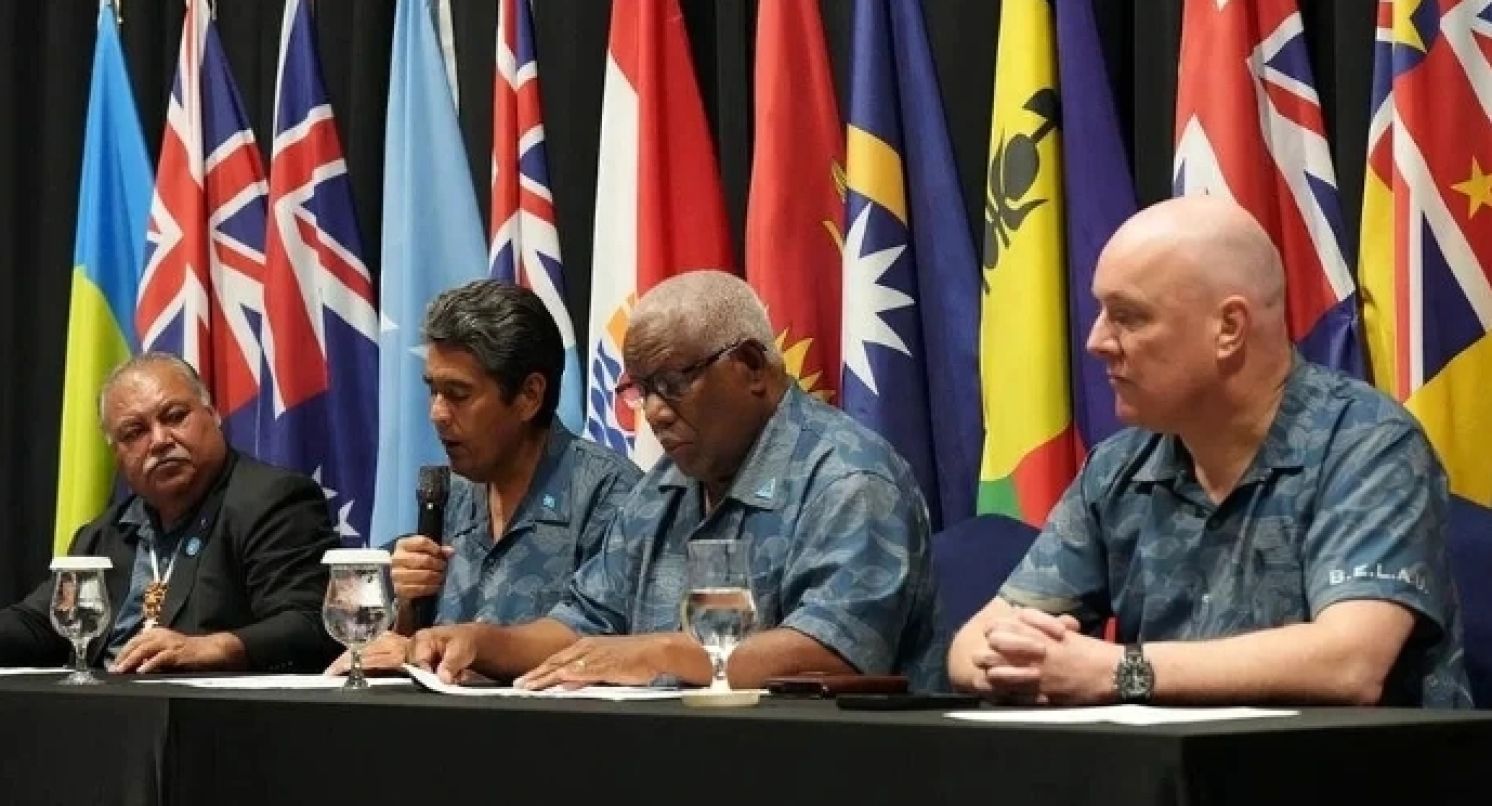
The Pacific Islands Forum (PIF) is being hosted by Palau, one of Taiwan’s diplomatic allies. Minister of Foreign Affairs Lin Chia-lung was invited to attend the 30th “Taiwan/ Republic of China and Pacific Islands Forum Countries Dialogue” and the “Pacific Prosperity Exhibition.” Qian Bo, mainland China’s Special Envoy for Pacific Island Countries, stated that Taiwan’s participation in the forum “will always have consequences,” while adding that “this is not a threat.” Beijing also warned national leaders and ministers not to attend side events involving Taiwan. The forum has now become entangled in U.S.-China political maneuvering over Taiwan, making it particularly sensitive ahead of the meeting between President Donald Trump of the United States and Chinese President Xi Jinping.
Given the current circumstances, Minister Lin’s participation in forum activities is likely to be limited to side events or meetings on the sidelines hosted by Palau, rather than formal multilateral meetings, because the Palauan government is the host of the event but not the organizer of the forum itself. What has truly made Beijing highly nervous and prompted stern warnings, however, is that, as a matter of convention, international multilateral organizations generally adhere to the “One China” principle and handle Taiwan’s participation cautiously. This time, however, the PIF secretariat has not done so.
From Beijing’s perspective, even if Lin participates only in side events or activities on the margins, it would still represent the participation of Taiwan’s Ministry of Foreign Affairs in the PIF. Even if such activities are viewed as a “borderline” form of “One China, One Taiwan,” Beijing has therefore sought to lower the level of the meeting. The fact that the leaders representing five of 18 PIF member states will not attend reflects this effort, at least creating the impression in public opinion that there is no consensus among Pacific countries in supporting or recognizing Taiwan as a Pacific country. However, Beijing’s actions have faced resistance. Prime Minister Anthony Albanese of Australia responded, “This is primarily a gathering of the Pacific family. The PIF decides what happens here, not other countries.”
Clearer support has come from the United States. Deputy Secretary of State Christopher Landau will attend the PIF Leaders Meeting and engage in dialogue with forum partners. A spokesperson for the Department of State also said that the United States strongly supports Taiwan’s continued participation in the PIF and emphasized that the Trump administration values its friends and partners among the Pacific Island countries. The focus of observation now is actually no longer simply whether Minister Lin can successfully participate in side events at the forum, but whether he will be able to meet Deputy Secretary Landau in Palau.
This in fact exposes an “open secret”: within the State Department system, its role in the increasingly active high-level U.S.-China engagement this year has been rather passive and marginal, creating a vicious cycle in which “the more marginalized it becomes, the more passive it becomes.” Why interpret the situation this way? This is because major European and American media outlets have repeatedly revealed that, as the Xi-Trump summit is dominated by economic and trade issues and decisions are made by the “inner circle” around Mr. Trump, the key U.S. senior officials and advisers who have driven previous Xi-Trump meetings or led U.S.-China dialogue have not come from the traditional diplomatic establishment.
A series of recent developments has also confirmed this inference. Mainland China’s Minister of Foreign Affairs Wang Yi recently held talks with U.S. Ambassador to Beijing David Perdue, rather than Secretary of State Marco Rubio. Similarly, two months ago, the mainland’s Executive Vice Foreign Minister Ma Zhaoxu visited the United States and met with senior State Department officials including Deputy Secretary Landau, but complaints from the Chinese side soon emerged that the United States had been neglectful in preparing for Mr. Xi’s visit. This indicates that the State Department system itself has remained detached from high-level Xi-Trump communication, which helps explain why it would “act on its own initiative” by using the PIF to stir up Taiwan-related controversy. This also demonstrates that even with “a constructive strategic stability relationship” serving as the framework, internal American political maneuvering remains a variable in U.S.-China relations that should not be underestimated.
The author is a think-tank researcher.
From: https://www.chinatimes.com/opinion/20260901004300-262104?chdtv